
Photography
Still-Life Photography
Still-life photography turns objects that do not move by themselves into an adjustable laboratory. Position, light, ground, duration, and viewpoint can be refined to study matter, symbol, form, and the strangeness of ordinary things.
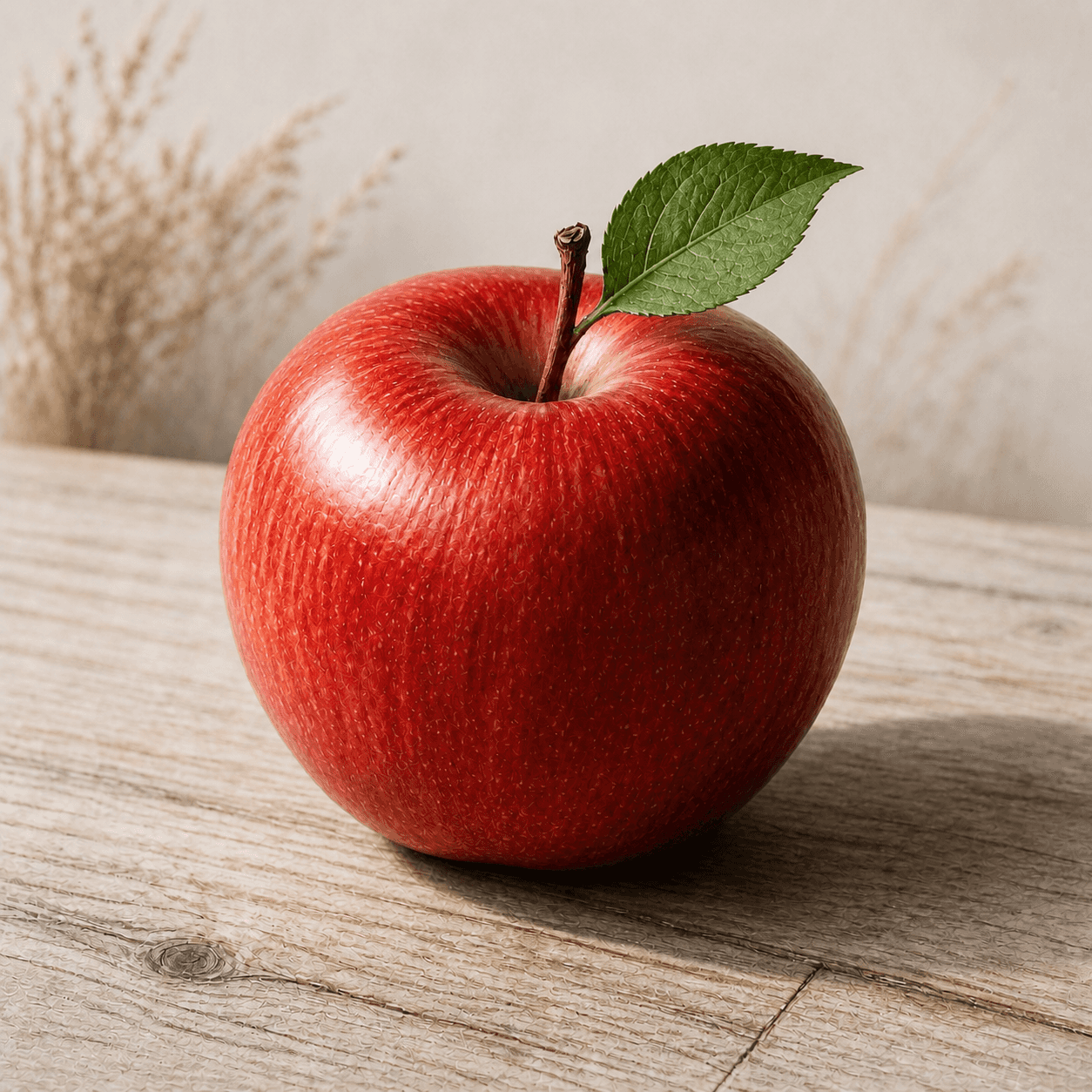
READ THE IMAGE
The apple is not waiting to be caught; every centimetre of placement decides form, matter, and meaning
Stem and leaf rise rhythmically, side light separates highlight, dark flank, and cast shadow, and the background becomes a quiet field. Slowness lets the photographer move object and lamp until relation is exact.
- 01
Measure the intervals
Space among fruit, leaf, and frame produces stability or tension rather than accidental blankness.
- 02
Make light distinguish matter
Skin shine, leaf texture, and diffuse wood reflection each describe a different surface.
- 03
Let cast shadow compose
Shadow identifies source direction, fixes the apple to the table, and extends visual weight.
- 04
Ask what context gives the object
Ripeness, damage, plenty, consumption, or death may be implied by condition and combination.
In one sentence
Select and arrange stationary subjects—
and turn the studio into a test bench for light, matter, and meaning
Still-life photography centres inanimate or temporarily still subjects. It inherits composition and symbolism from painting while using photographic focus, exposure, enlargement, and surface detail. Objects may be strictly arranged in a studio or found in life; what matters is that relations among things, their materials, and duration of looking become primary.
VISUAL LANGUAGE
Arrangement DNA
Object
Selection narrates
Placement
Relation can be tuned
Angle, overlap, interval, and centre of gravity create order or tension.Light
Translator of material
Source size, distance, and direction control metal, glass, skin, and textile reflection.Ground
Background is active
Table, sweep, corner, or environment sets scale, story, and colour bounce.Duration
Still things still change
Flowers wilt, food oxidises, ice melts; a long setup can include transformation.Where it came from
Still life helped photography begin and keeps serving as a laboratory whenever technology or ideas change
Early exposures were long, making casts and tabletop objects more practical than living sitters; Daguerre and Talbot used them to demonstrate the medium. Nineteenth-century photographs borrowed painting, while modernists renewed objects through close-up, sharp detail, abstract light, and print culture.
Still life participates in invention
Motionless subjects are ideal for testing sensitivity, lens, and detail during long exposure.
Photography borrows painted arrangement
Flowers, fruit, vessel, and collection argue that the new medium can support complex art.
Modernism makes the studio a laboratory
Weston, Man Ray, Outerbridge, and others transform objects through close view and light.
Commodity and concept enter
Advertising, sculptural setup, archive, and digital construction address desire, waste, and image truth.
ARTISTS & WORKS
Meet it through four photographers
William Henry Fox Talbot
Uses plant, vessel, and shelf to test paper negative and contact printing, making objects evidence of a new medium.Edward Weston
Turns pepper, shell, and vegetable into exact yet ambiguous form, joining matter and abstraction.Irving Penn
Builds a studio world of restraint, meticulous print, and unexpected subjects where elegance meets decay.Jan Groover
Uses kitchen utensils, reflection, and shallow space to make ordinary objects a complex chromatic structure.How to recognise it
Test whether object, light, ground, and duration operate as one designed system
- ✓Do subject choice and condition propose a theme rather than mere prettiness?
- ✓Do highlight, shadow, and reflection accurately differentiate materials?
- ✓Do interval, overlap, edge, and negative space establish order?
- ✓Does the work make an ordinary thing newly visible rather than copy a catalogue?
STYLE RELATIONS
Three object practices
REFERENCES
Sources & image note
The apple is a contemporary teaching still life demonstrating arrangement, side light, and material control, not a historical work. Its natural appearance is nevertheless staged through position, ground, and illumination.