
Photography
Vintage Film
Vintage film is not one yellowed filter. It deliberately cites a period, emulsion, lens, processing, print, and storage history. Ask which old image system it resembles before adding grain, leaks, or fade.
READ THE IMAGE
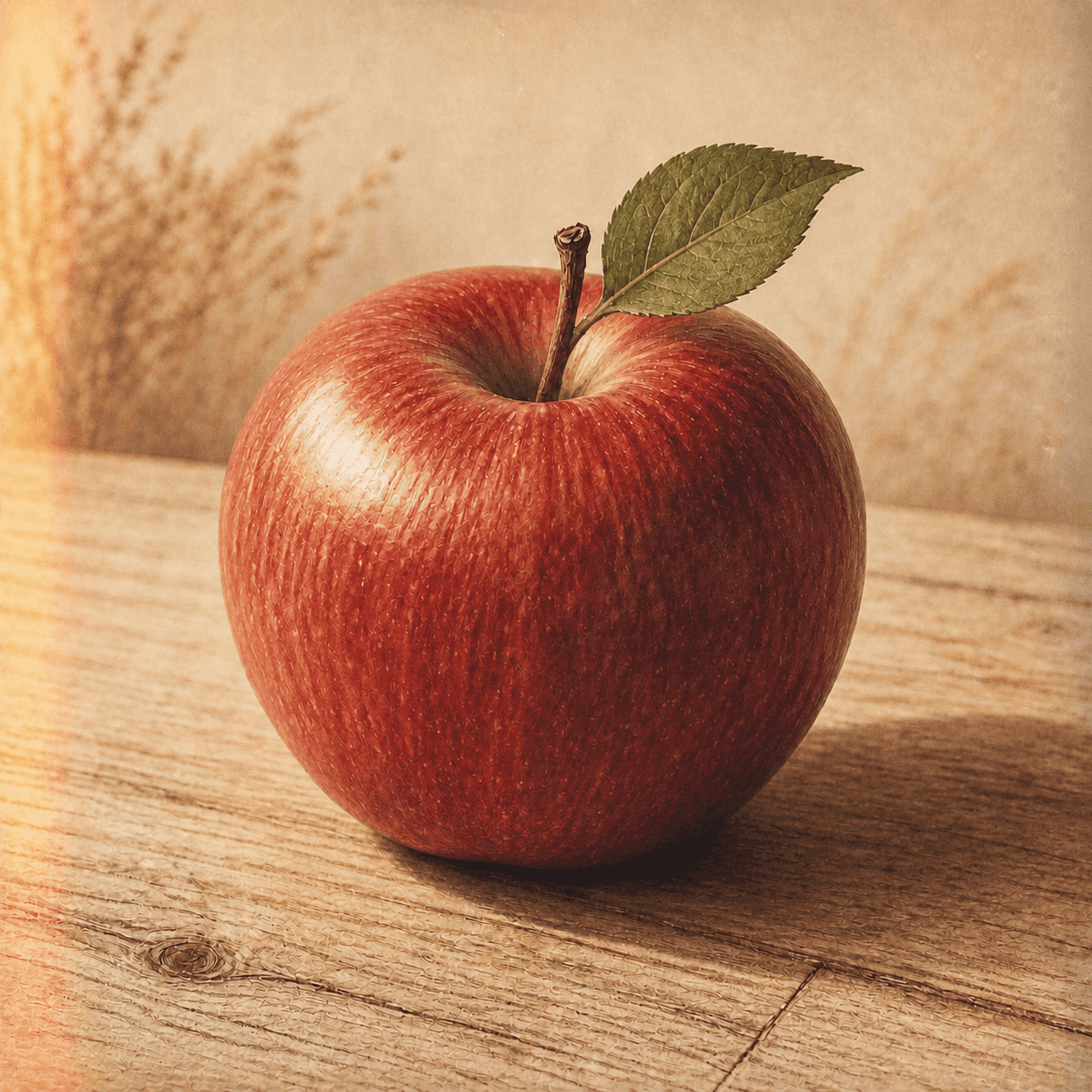
The apple looks old for more than yellowing; colour layers, contrast, and damage must belong to one material chain
Highlight is slightly warm, dark colour turns cooler, grain changes with value, edges soften modestly, and contrast feels compressed through print or scan. Agreement among traces creates believable period.
- 01
Identify the colour family first
Kodachrome-like reversal, colour-negative paper, and faded print have different red-green-blue relations.
- 02
Tie grain to definition
Small, fast stock may show more grain while lens, focus, and scan jointly alter detail.
- 03
Place damage where it could occur
Leaks enter from gate or roll edges, while dust and scratches follow handling paths.
- 04
Give fading chemical logic
Dyes decay at different rates; heat, light, and humidity produce particular casts, yellowing, and brittleness.
In one sentence
Choose a specific historical imaging system—
and rebuild its colour, resolution, wear, and viewing medium
Vintage film is a contemporary stylisation achievable with old stock, expired material, cross-processing, period lens, darkroom, or digital simulation. It should cite a concrete source—1960s 35mm slides, 1970s family colour negatives, Super 8 projection, or a 1990s disposable camera—not an abstract past. Convincing work separates characteristics created at exposure from deterioration acquired during storage.
VISUAL LANGUAGE
Period DNA
Source
Name period and carrier
Curve
Contrast follows the chain
Negative, reversal, paper, and scan each modify toe, shoulder, and colour.Grain
Scale belongs to format
8mm, half-frame, 35mm, and medium format show different grain at equal output size.Wear
Age is not a sticker
Leak, dust, scratch, mould, and fade each have direction, location, and storage causes.Medium
Viewing device shapes memory
Slide projection, family album, television transfer, and magazine print define oldness.Where it came from
Today's retro signs come from once-new consumer technologies and their actual ageing
Transparent roll film in 1889 advanced popular photography; Kodachrome became a successful amateur colour stock in 1935, and Kodacolor brought colour negative to still photography in 1942. Super 8, colour paper, and inexpensive snapshots defined later generational memories before digital presets compressed them into vintage.
Roll film and box cameras build family snapshot
Limited range, black-and-white print, and simple lens mark early mass imagery.
Kodachrome, colour negative, and home movies expand
Saturated slides, colour paper, and 8/16mm projection create distinct memories.
Super 8, faster colour negative, and disposable cameras spread
Small-format grain, direct flash, lab print, and date stamp enter family archives.
Material difference becomes repeatable preset
Scans, phone filters, and emulation revive period colour and often mix incompatible traces.
ARTISTS & WORKS
Meet it through four photographic practices
Jacques Henri Lartigue
Early family albums preserve private speed, dress, and leisure as a later dream of the good old days.Ernst Haas
Uses colour film, motion blur, and reflection to show that mid-century colour was not merely faded warm softness.William Eggleston
Makes saturated colour-negative and dye-transfer views of ordinary Southern settings a serious language.Nan Goldin
Defines the lived temperature of 1980s community memory through colour slide, direct flash, and intimate snapshot.How to recognise it
Infer every trace from a nameable period and process
- ✓Can the format, stock, and output medium being imitated be stated?
- ✓Are grain, cast, contrast, and definition mutually compatible?
- ✓Do leak, dust, date stamp, or border occur in plausible places?
- ✓Is a feature from exposure, or damage acquired only in storage?
STYLE RELATIONS
Three film-related languages
REFERENCES
Sources & image note
The apple is a vintage-film teaching simulation combining warm highlight, cool shadow, restrained grain, and slight scan character. It corresponds to no verifiable negative or year and only demonstrates coherent material logic.