
Internet Aesthetics
Dreamcore
Dreamcore splices familiar childhood scenes, old-media colour, and illogical space into a memory still unclear after waking: tenderness and unease coexist.
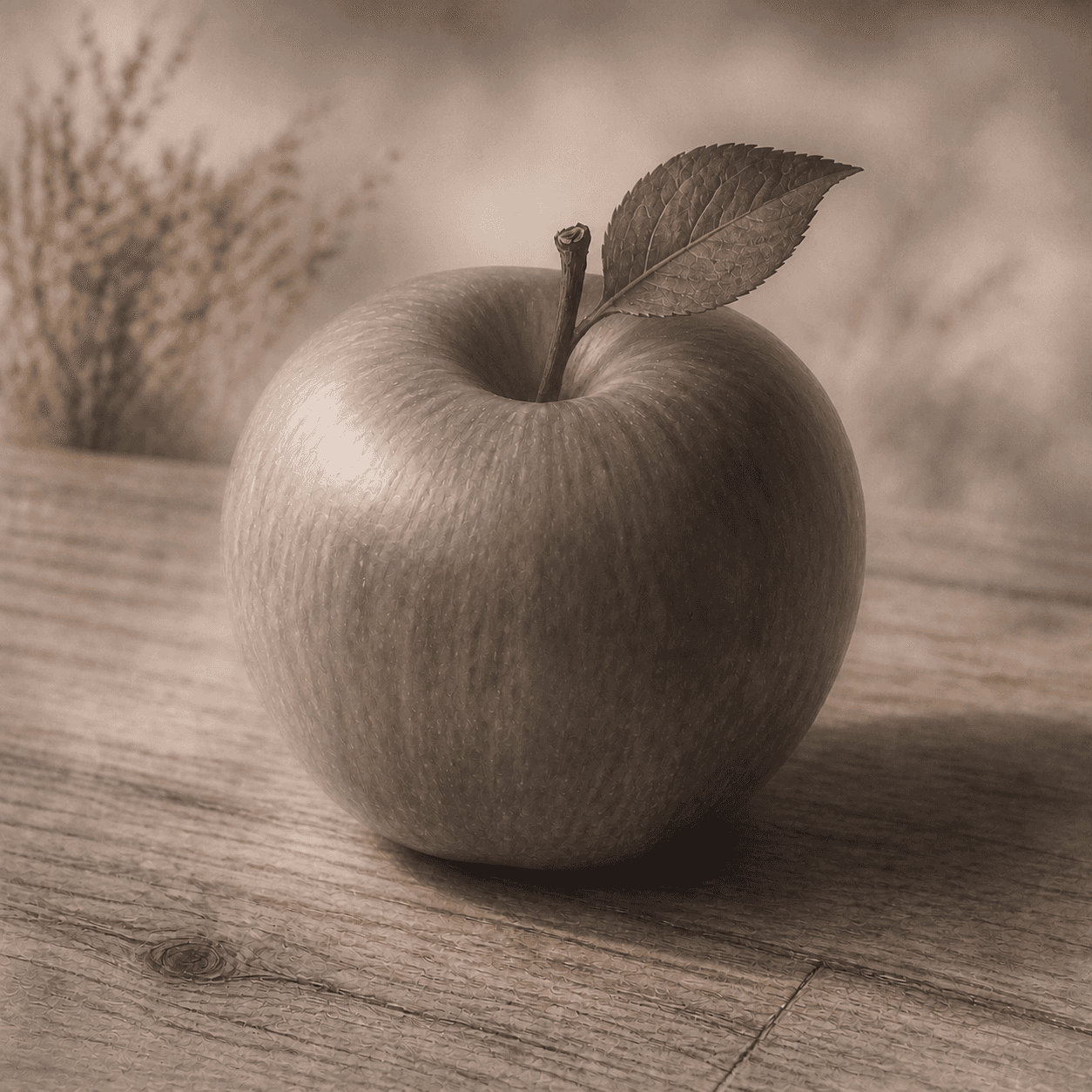
READ THE IMAGE
The apple feels brought out of a forgotten nap: familiar, yet impossible to explain here
Soft haze lowers edges; a door leads to sky, a table floats over grass, or text behaves like childhood prompt card. Objects feel emotionally close while losing ordinary causality and scale.
- 01
Dislocate familiar things
Toy, classroom, ride, or domestic object enters impossible space.
- 02
Light it like memory
Low saturation, soft focus, exposure, or night lamp feel washed by time.
- 03
Suspend text
Short phrase, question, and old subtitle leave blank rather than explain.
- 04
Locate unease
It comes from slightly wrong scale, door, time, and logic, not gore.
In one sentence
Use nostalgic object, soft-focus space, and discontinuous narrative
to turn the close-but-unsettling feeling after waking into image
Dreamcore is a contemporary image aesthetic circulating online, often adjacent to weirdcore and liminal space. It draws on childhood object, early-web image, blurred photography, and surreal collage so a location feels like home, school, or playground while refusing real time and physics. It can be warm or sad; emotional association rather than horror genre is central.
VISUAL LANGUAGE
Dream-association DNA
Old
Memory supplies objects
Haze
Edge is forgotten
Soft focus, low contrast, and grain weaken certainty.Jump
Space ignores causality
Door, stair, sky, and room connect dreamwise.Text
Language leaves gap
Prompt and question imply story but refuse full explanation.Light
Unease stays slight
Small shifts of scale and time sustain dream feeling better than direct scare.Where it came from
From surreal image, online nostalgia, and platform collage to a rapidly circulating core aesthetic after the pandemic, dreamcore makes personal memory into shareable blur
Research describes dreamcore as fusing nostalgia, liminality, and surrealism through low saturation, blurred light, and abandoned space. Hashtag, collage template, and algorithmic circulation place different childhood memories together into a dream scene that can be shared without needing to match.
Surrealism offers nonlinear imagery
Dream, symbol, and illogical object relation challenge linear story.
Old media becomes memory material
Home video, early web, games, and children’s television leave fragments for collage.
Dreamcore forms online
Image boards, Tumblr, TikTok, and forums circulate soft-focus dream tags.
Nostalgia draws psychological and cultural study
Creators discuss comfort, loss, identity, and algorithm-amplified association.
ARTISTS & WORKS
Meet it through four cases
Surrealist collage
Illogical object relation offers an art-historical precedent for dream image.Children’s TV and home-video fragments
Expired colour, caption, and low resolution become dreamcore memory texture.TikTok dreamcore edits
Nonlinear image, text, and sound turn private feeling into shareable template.Abandoned amusement-park images
Familiar joyful apparatus in empty haze triggers loss and liminality.How to recognise it
Find noncausal combinations of familiar things, then test whether haze, text, and space leave emotion without full explanation
- ✓Are close objects placed at unreasonable scale or location?
- ✓Does light weaken reality rather than merely blur?
- ✓Does text make associative gap instead of telling a complete horror story?
- ✓Does unease arise from slight logic shift rather than gore?
STYLE RELATIONS
Three uncertain spaces
REFERENCES
Sources & image note
The apple is a dreamcore teaching interpretation using haze, memory object, and noncausal space. It treats dreamcore neither as diagnosis nor real dream record.