
Painting Media
Glazing
Glazing gains depth as light crosses transparent or translucent films and returns from a lighter layer beneath. Each pass shifts the colour and value below only slightly. The surface may remain almost level, yet holds an optical structure completed at different times.
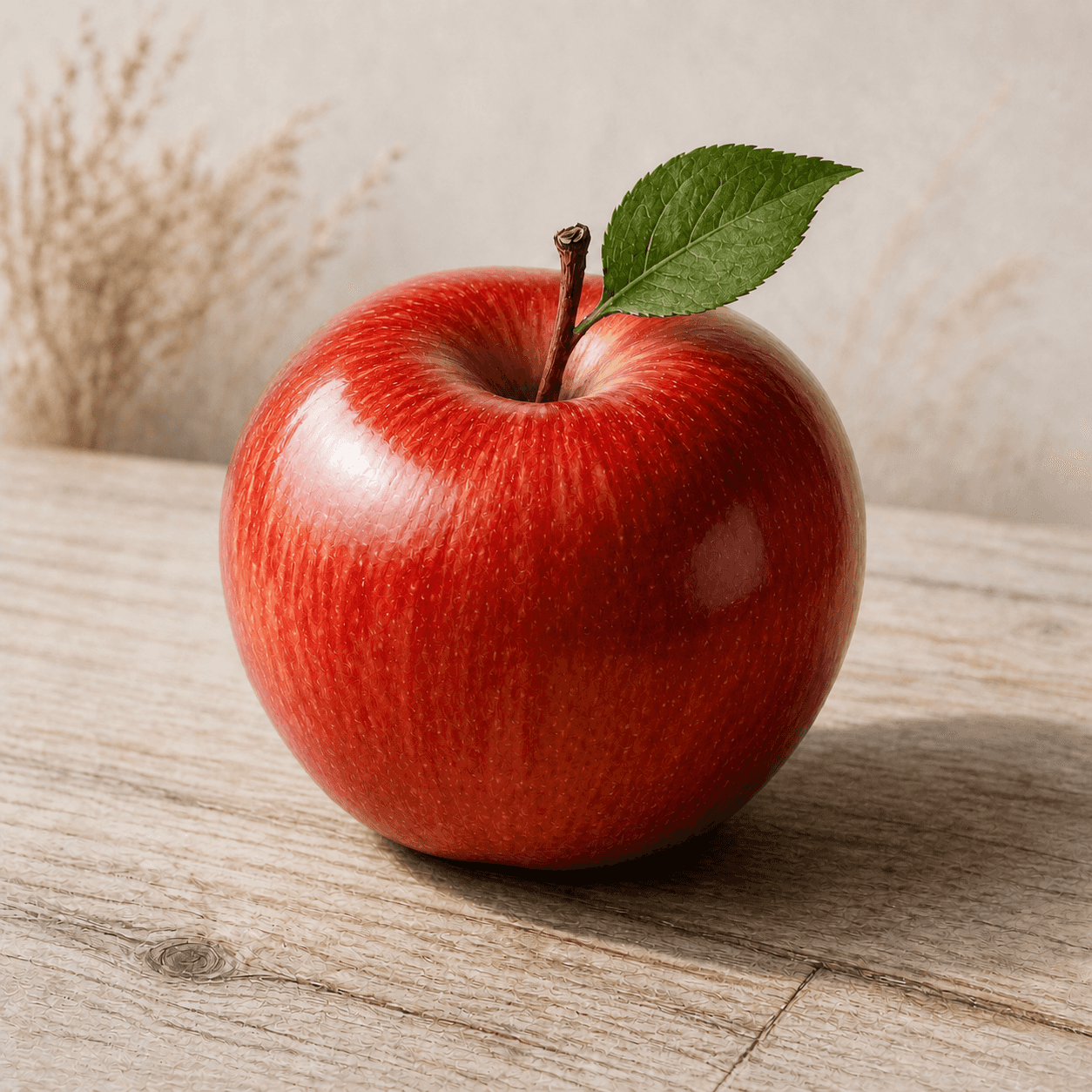
READ THE IMAGE
The apple's red is not mixed once on a palette; light crosses warm red, cool shadow, and pale ground in sequence
A pale grey-orange underpainting establishes volume, transparent red unifies skin, and cool violet film lowers only the turn. The brightest point is reserved or closed with little opaque paint. Edges stay soft without being blended into mud.
- 01
See a pale ground light from within
Around the highlight a bright preparation shows through red film instead of thick white sitting on top.
- 02
See transparent red unify the key
Different values share one red atmosphere while modelling below remains legible.
- 03
See a cool film deepen shadow
Violet changes temperature and value while warm undercolour still contributes.
- 04
See a level surface hold unequal layers
Ridges stay low; depth resides mainly in optical order rather than physical relief.
In one sentence
Lay transparent colour over a stable underlayer—
and mix light through films instead of premixing all pigment
Glazing is a transparent colour layer that affects the hue and value of dried paint beneath. It works in oil, acrylic, and even watercolour, though optics and adhesion vary by binder. Transparent lakes, some earths, and modern organics commonly suit oil glaze; an opaque pigment used very thinly scatters differently. More medium does not automatically mean better transparency: excess oil or resin can yellow, sink, wrinkle, and weaken a film.
VISUAL LANGUAGE
Light-through-film DNA
Ground
Model form first
Clear
Film filters without hiding
An upper pass absorbs selected wavelengths and returns underlayer reflection as compound colour.Dry
Intervals preserve distinction
A stable prior layer avoids lifting, muddy mixing, and wrinkling.Thin
Little paint spreads evenly
A soft brush, modest medium, and wiping control film; pooled margins become uneven.Optical
Mixture completes in the eye
Blue over yellow differs from premixed green, depending on transparency and illumination.Where it came from
Transparent layering is no single secret; Netherlandish oil systematised it, Venice expanded compound colour, and later painters used it selectively beside direct handling
Transparent coatings precede oil painting in many decorative and pictorial practices. Early Netherlandish painters used oil to make many pigments translucent and repeatedly glazed over pale ground and opaque modelling, producing brilliant textile, jewel, flesh, and shadow. Bellini and Titian enlarged this compound colour, while Velázquez used glaze locally—evidence against one universal recipe.
Transparent coating already has many uses
Aqueous, resinous, and oily layers modify grounds in manuscript, decoration, and mixed technique.
Netherlandish painters systematise oil glaze
Van Eyck, Campin, and Memling accumulate luminous reds, greens, and half-shadow over precise layers.
Venetian colour expands scale and freedom
Bellini and Titian alternate transparency, translucent scumble, and opaque stroke.
Glaze becomes a selective layer tool
Rembrandt, academies, and modern realists deepen passages locally; acrylic offers a fast-dry route.
ARTISTS & WORKS
Meet it through four artists
Jan van Eyck
Accumulates transparent colour over a pale precise preparation so skin, jewel, metal, and textile reflect differently.Giovanni Bellini
Extends tempera tradition with compound oil colour, unifying air, flesh, and textile through soft layers.Titian
Alternates lake glaze, translucent scumble, and opaque stroke so colour grows through extended revision.Johannes Vermeer
Joins compound films, exact opaque forms, and dotted light to separate wall, cloth, flesh, and pearl.How to recognise it
Seek optical sequence and layer boundary—not every soft gradient or overall yellow cast as glazing
- ✓Does modelling beneath remain active through the upper colour?
- ✓Does compound hue feel penetrated rather than premixed into one mud?
- ✓Do pool, wipe, and margin agree with spreading a thin film?
- ✓Could yellow or dark unity come from aged varnish rather than an artist's glaze?
STYLE RELATIONS
Three oil-paint layer strategies
REFERENCES
Sources & image note
The apple is a contemporary glazing teaching interpretation simulating pale modelling, transparent red unity, cool shadow film, and selective opaque light. A screen cannot reproduce real multilayer refraction, gloss variation, or colour shift caused by aged varnish.