
Internet Aesthetics
Goblincore
Goblincore favours soil, moss, mushroom, stone, and small things mainstream taste overlooks. It uses untidiness and collecting against perfect display without dressing real hardship up as cute.
READ THE IMAGE
Do not look for a cartoon goblin; see how the image refuses nature that must be clean, symmetrical, and display-ready
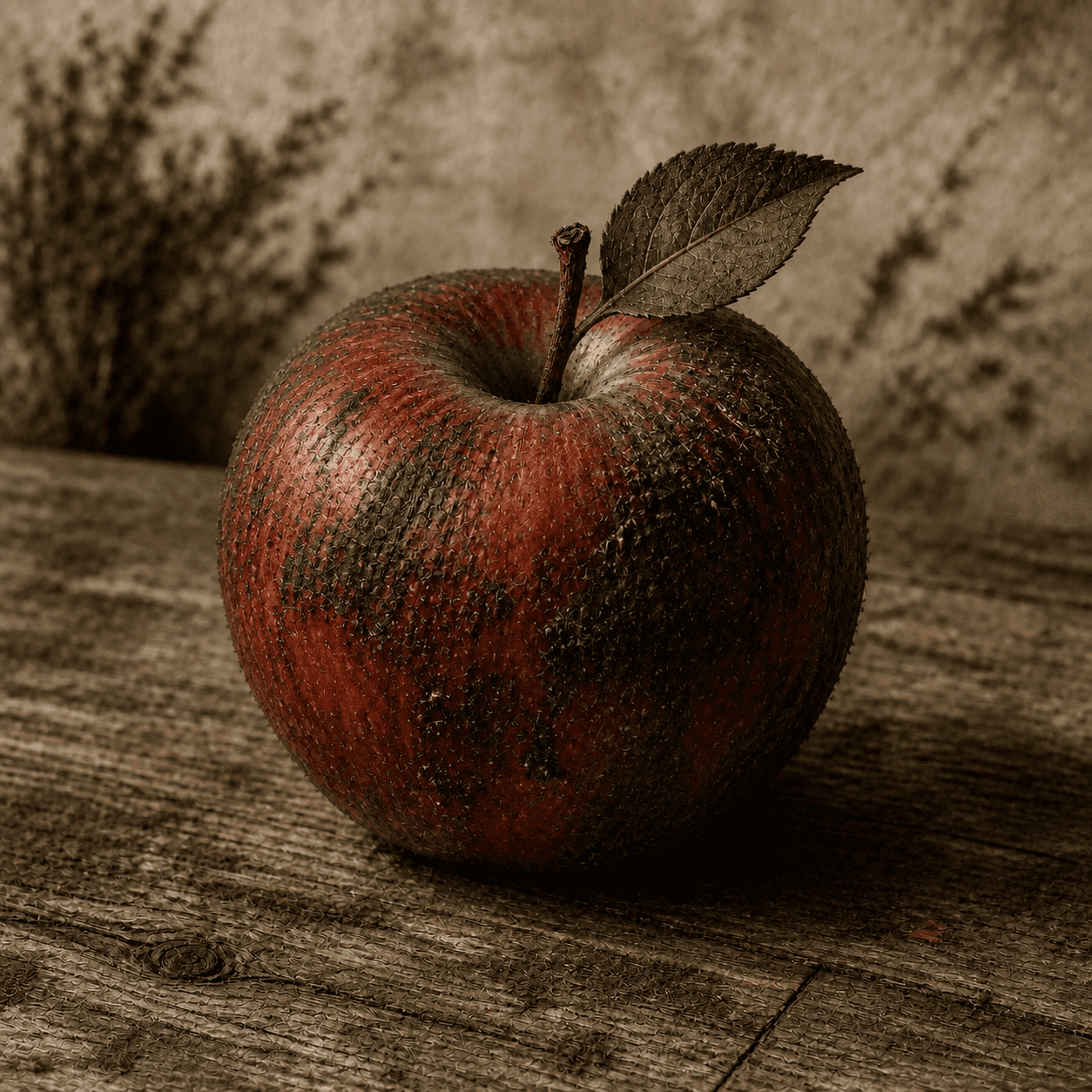
The teaching image places apple among damp texture, stone, and moss. Goblincore usually avoids cottagecore’s tidy abundance, making soil, insect, wear, and tiny collection the protagonists.
- 01
See nature at ground level
Moss, leaf litter, soil, insect, and stone crack shift attention from grand landscape to foot-level ecology.
- 02
See whether objects were found
Cap, stone, button, and old metal feel treasured after chance discovery rather than like polished decor.
- 03
See whether mess has order
Layer, mixture, and asymmetry can organise intimacy; they are not arbitrary accumulation.
- 04
See what rebellion addresses
It resists perfection, efficiency, and one standard of beauty—not by romanticising danger, poverty, or poor hygiene.
In one sentence
Use damp ecology, found object, and asymmetric collection
to rewrite overlooked small-scale nature from “mess” into a world worth approaching
Goblincore is a nature-oriented internet aesthetic, often treated as a rougher neighbour to cottagecore. It draws on folk goblin imagery, internet ugly aesthetics, and collecting impulses to favour mushroom, moss, stone, small creature, and old object. Its point is neither creature cosplay nor random chaos: it rejects the judgement that only smooth, tidy, expensive things deserve attention.
VISUAL LANGUAGE
Rough-intimacy DNA
Damp
Surface carries ecology
Small
Scale moves to the ground
Snail, pebble, seedpod, and crack ask a viewer to bend down.Found
Object has chance encounter
Irregular collection gains value through discovery and story, not price or rarity.Mess
Asymmetry refuses the display case
Layer and wear resist perfect presentation while retaining a clear focus.Care
Liking nature also has duties
Watching, collecting, and keeping should respect habitat, animals, and shared space.Where it came from
From marginal creatures in folklore, internet ugly aesthetics, and a counter-imagining of cottagecore to platform communities renaming nonnormative nature, goblincore moves the “low” into the centre
Internet aesthetics are continually negotiated through tag, collage, and discussion rather than defined by one institution. Goblincore uses the folk goblin to express resistance to tidiness, display, and mainstream standards while sharing a nature interest with cottagecore. It is also adjacent to pandemic-era “goblin mode” anti-self-optimisation talk, but the terms are not identical.
Marginal creature supplies material
Cave, forest, found object, and mischief become changeable resources for later network retelling.
Ugly aesthetics challenge smooth interface
Low-fi, odd, and amateur expression expand what can be interesting or valuable.
Core-aesthetic tags branch
Cottagecore, cluttercore, and related communities differentiate approaches to nature and collecting.
Short video amplifies object and micro-ecology looking
Small collection, mushroom, moss, and outdoor record become shareable identity signs.
ARTISTS & WORKS
Meet it through four looking practices
Moss watching
Looking at tree root, crack, and damp ground privileges slow attention rather than ownership.Found-object drawer
Stone, button, and metal sit by personal story, not museum hierarchy.Old-object repair
Wear, rust, and mismatch remain, resisting a demand that things be new and flawless.Folklore retelling
Creators turn the “monster” from an excluded being into a role for humour, intimacy, and self-expression.How to recognise it
Confirm that ground-level ecology and found objects are subjects, then see how the image distinguishes respect for nature from consuming it
- ✓Does it attend to moss, soil, small creature, or crevice-scale ecology?
- ✓Do found objects carry chance encounter and personal story rather than luxury display?
- ✓Does mess retain material relation and a focus rather than becoming meaningless pile?
- ✓Does it avoid habitat damage, hoarding risk, or romanticising poverty and poor hygiene?
STYLE RELATIONS
Three nature imaginaries
REFERENCES
Sources & image note
The apple is a goblincore teaching interpretation highlighting moss, stone, and damp surface. It does not encourage habitat damage, animal capture, dangerous foraging, or romanticising real hardship.