
Illustration
Realistic Illustration
Observation and reference build a believable world, but narrative remains the purpose: reality may be rearranged, reduced, and stressed as long as the scene convinces.
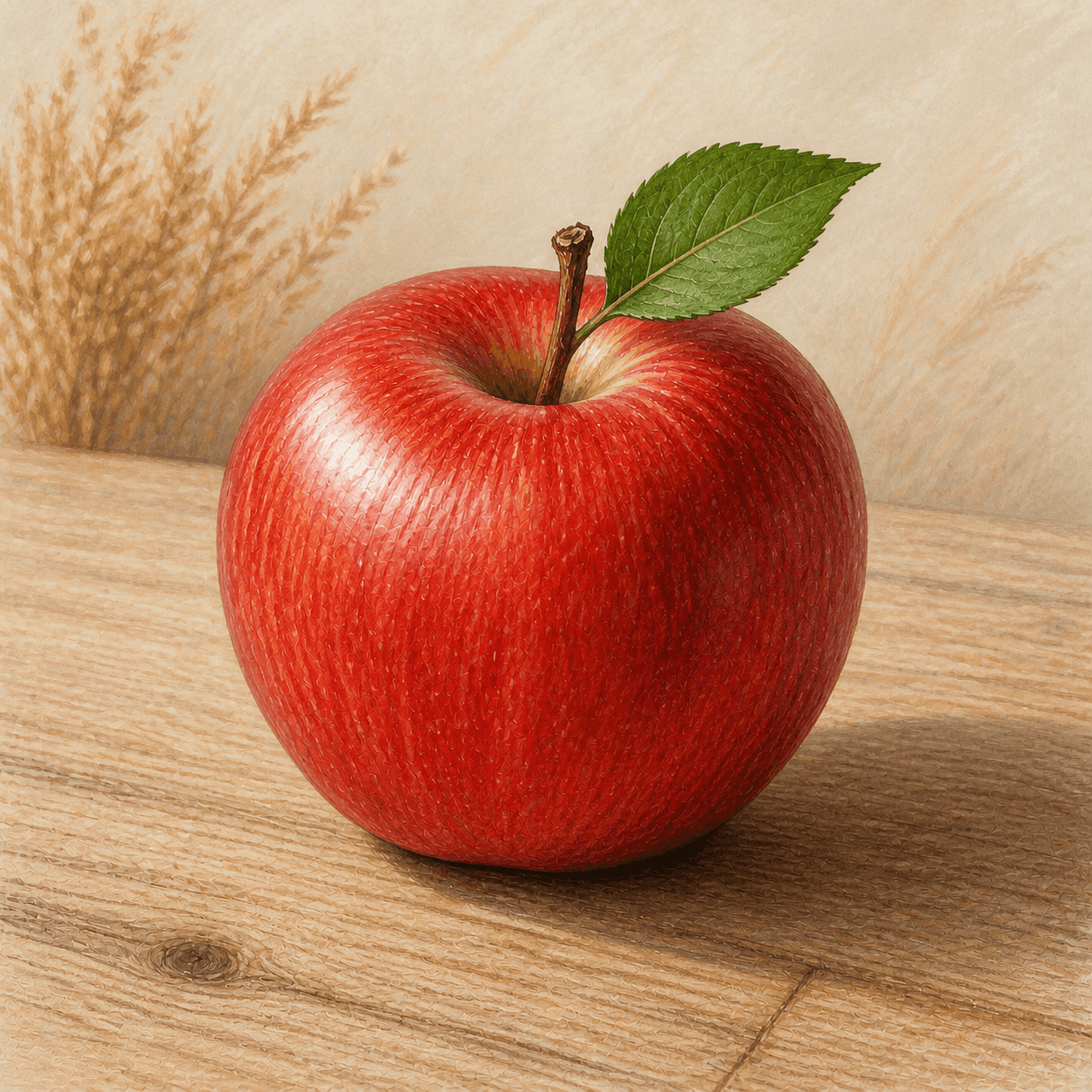
READ THE IMAGE
Real enough to convince, visibly made enough to remain illustration
Proportion, volume, and shadow are credible while short strokes remain visible. Realistic illustration need not erase its medium; form, light, material, and space must support understanding.
- 01
Start with structure
Cavity, contour, leaf attachment, and table perspective form a credible skeleton.
- 02
Check consistent light
Highlight, back light, occlusion, and cast shadow share one direction.
- 03
Distinguish materials
Skin, vein, timber, and distant ground use different edges and marks.
- 04
Find the narrative edit
The background is generalised while the protagonist is clearer, directing attention instead of copying evenly.
In one sentence
Build credibility through observation—
then turn reality into explanation or story through selection
Realistic illustration constructs a believable world through proportion, perspective, light, material, and anatomy, but is not an inefficient substitute for photography. An illustrator can combine references, reconstruct an absent moment, shift viewpoint, and clarify selected details. ‘Realistic’ describes representation; ‘illustration’ places the image within text, commission, communication, or narrative.
VISUAL LANGUAGE
Credibility DNA
Structure
Accurate, inferable
Light
Unified, directional
Value explains volume, distance, and focus.Material
Differentiated
Edge, texture, and reflection change with the object.Selection
Narrative driven
References combine, priorities strengthen, secondary information recedes.Medium
Visible without breaking illusion
Marks may remain if spatial credibility holds.Where it came from
Print culture joined observational skill to a profession of storytelling
Realistic representation has older art histories; modern realistic illustration formed through newspapers, books, advertising, and mass reproduction. Photography became reference and compositional tool rather than ending it.
Mass print and professional illustration
Wood engraving, lithography, and magazines carry news, literature, and knowledge to wide readerships.
Golden age of illustration
Colour printing and national magazines demand convincing figures, products, and narrative scenes.
Photography collaborates with painting
Illustrators photograph models and props, then reconstruct pose, relation, and meaning.
Reference and media expand
3D, photography, and digital brushes join the process; realism remains visual judgement.
ARTISTS & WORKS
Meet it through four illustrators
Howard Pyle
Teaching and narrative composition help establish modern American illustration.Norman Rockwell
Models, photography, drawing, and exact composition turn daily drama into magazine images.N. C. Wyeth
Action, scale, and colour construct convincing literary adventure.Jerry Pinkney
Watercolour observation, historical research, and humane characters retell classics.How to recognise it
Confirm credibility, then find the illustrator's edit
- ✓Are proportion, perspective, light, and contact mutually consistent?
- ✓Do different objects follow distinct material logic?
- ✓Does the image organise focus for a text, story, or explanation?
- ✓Does it reconstruct or emphasise reality rather than pursue pixel copying alone?
STYLE RELATIONS
Three approaches to reality
Realistic Illustration
Uses credible structure and selective detail for narrative communication.CURRENTHyperrealistic Illustration
Pushes resolution, reflection, and microdetail beyond ordinary viewing intensity.↗Photography
Records an optical event, then forms an image through framing, timing, and processing.↗REFERENCES
Sources & image note
The apple is a contemporary teaching interpretation using credible structure, unified light, and visible marks; it is not a historical work.