
3D Art
Stylized Realism
Stylized realism is not a cartoon filter over a realistic render. It selectively preserves physical cause while deliberately changing visual fact. Material still answers light and contact still carries weight; silhouette, proportion, palette, shadow, and detail density are redesigned around emotion and story.
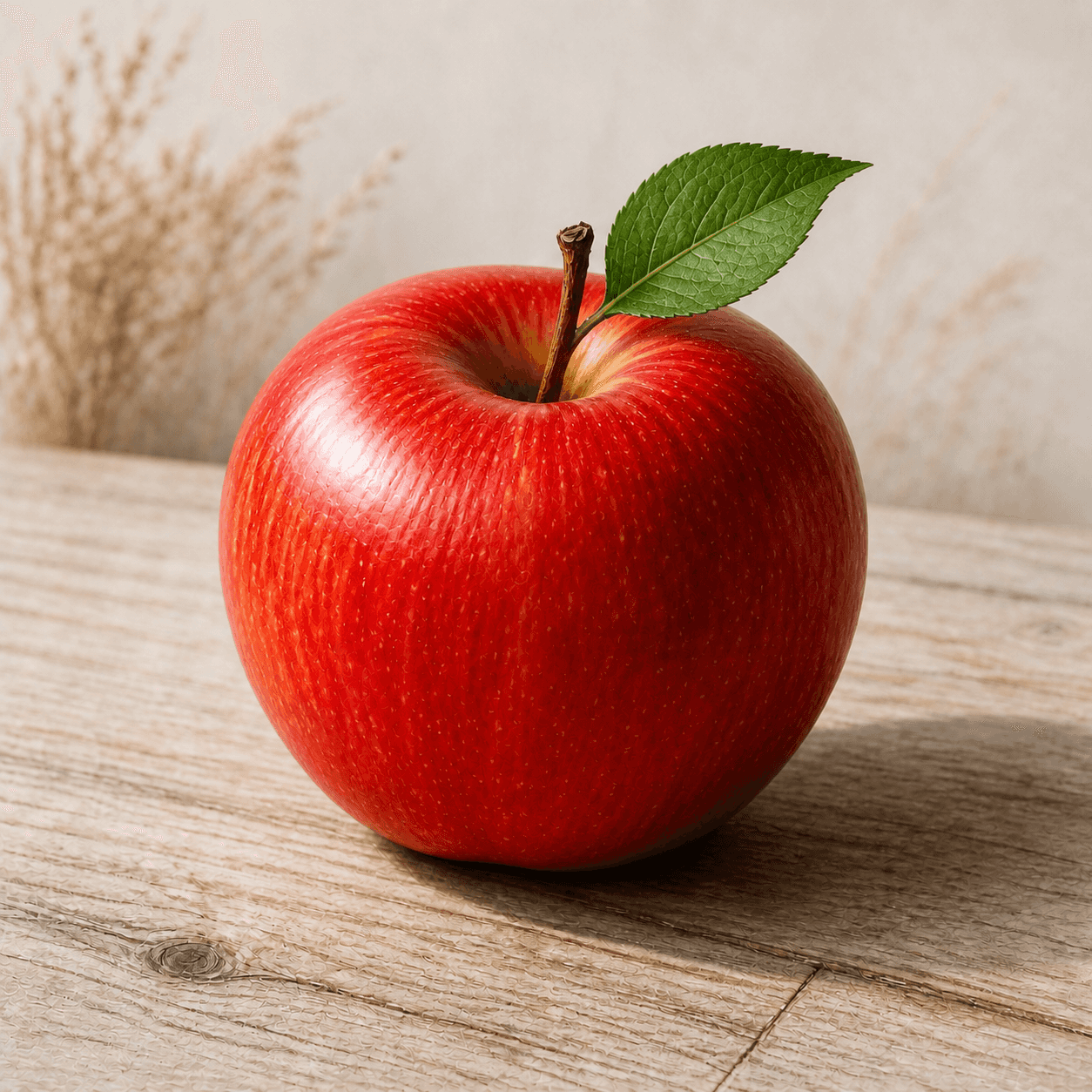
READ THE IMAGE
The apple still feels pick-up-able, but every realism cue has passed through the question: why keep it?
The fruit becomes fuller, its dimple and leaf enlarge for recognition, and waxy highlight plus contact bounce remain. Skin pores simplify into designed clusters, while warm light and cool shadow separate more clearly than life.
- 01
Let silhouette precede surface detail
A wider fruit, deeper dimple, and clearer leaf arc remain identifiable when texture disappears.
- 02
Keep material plausible but compressed
Highlight still follows roughness and source, yet resolves into a broad readable shape instead of every micro-reflection.
- 03
Let shadow serve composition
Contact retains weight while the cast shape is cleaned into a rounder, more concentrated rhythm than physics alone.
- 04
Distribute detail around focus
Pores gather near lit turns and the near side; distant areas stay quiet instead of wearing uniform noise.
In one sentence
Use reality to establish belief—
then art-direct which rules to enlarge, compress, or bend
Stylized realism sits between photographic simulation and overt non-photorealism. It commonly starts from usable 3D geometry, PBR material, and global illumination, yet permits concept design to direct modelling, shading, lighting, and even simulation. The question is not a percentage of realism but consistency of departure: rounded shape and warm palette require shadow edge, texture grain, and animation rhythm from the same world.
VISUAL LANGUAGE
Credibility-and-choice DNA
Shape
Silhouette carries first recognition
Material
Keep category, compress complexity
Wax, wood, and leaf retain distinct reflection while parameter ranges resolve into a clear hierarchy.Light
Plausible motive, directable result
A key direction explains space; fill, rim, and shadow shape may depart for readability.Colour
Palette outranks local accuracy
Warm-cool, saturation, and value groups summarise continuous spectra into limited stable families.Stable
Style must survive every frame
Line, texture, and procedural noise move coherently with objects instead of crawling and flickering.Where it came from
From shape design in character animation to art-directable material in the PBR era, stylized realism negotiates belief and expression
Traditional animation already used exaggerated form and simplified palettes for credible characters. Once 3D features emerged, digital figures had to retain that design through volume, light, and performance. Subdivision, production rendering, and global illumination raised credibility from the 1990s; recent productions such as Luca, Soul, and Elemental return silhouette, shadow, volume, and procedural matter to direct art control.
Animation establishes shape and performance principles
Squash, stretch, clear silhouette, and colour scripting show believable action need not copy anatomy.
3D features translate design into volume
Subdivision, digital surfacing, and production lighting maintain continuous shapes across camera views.
PBR raises baseline credibility
Consistent material and transport free teams to focus on proportion, palette, and story focus.
Pipeline-wide stylization moves upstream
Pixar and peers make shadow fringe, linework, illustrative texture, volume silhouette, and simulation art-directable.
ARTISTS & WORKS
Meet it through four films
The Incredibles
Builds a superhero family through mid-century modern massing, exaggerated bodies, and credible material light.Ratatouille
Makes food sensorially persuasive while character shape, expression, and Paris space retain illustration.Luca
Centres handmade concept art, simplifying skin and sea while directing shadow fringe, edge colour, and foam silhouette.Elemental
Lets fire, water, air, and earth retain material cues while simulations yield to expressive character silhouette.How to recognise it
Test whether every exaggeration crosses model, material, light, and animation as one deliberate system
- ✓Without texture, do silhouette and proportion still express a distinct character?
- ✓Do materials retain category difference while omitting micro-noise that does not aid reading?
- ✓Does light have a credible motive, and do directed shadow and rim clearly support focus?
- ✓Across shots and motion, do palette, detail density, and shape grammar remain stable?
STYLE RELATIONS
Three degrees of 3D abstraction
Stylized Realism
Keeps credible light, material, and volume while coherently directing proportion, palette, shadow, and detail.CURRENTRealistic 3D
Pushes scale, PBR material, light, and camera toward measured reality and optics.↗Toon Shading
Foregrounds stepped tone, outline, and graphic shadow while reducing continuous physical response.↗REFERENCES
Sources & image note
The apple is a stylized-realism teaching render retaining material, contact, and lighting cause while exaggerating fruit shape, leaf, palette grouping, and shadow rhythm. It is not an original asset from any cited film.