
Classical Art
Academic Art
Academic art was more than a polished look: it was a system of training, hierarchy, jury, and exhibition that shaped how artists learned—and who could be seen.
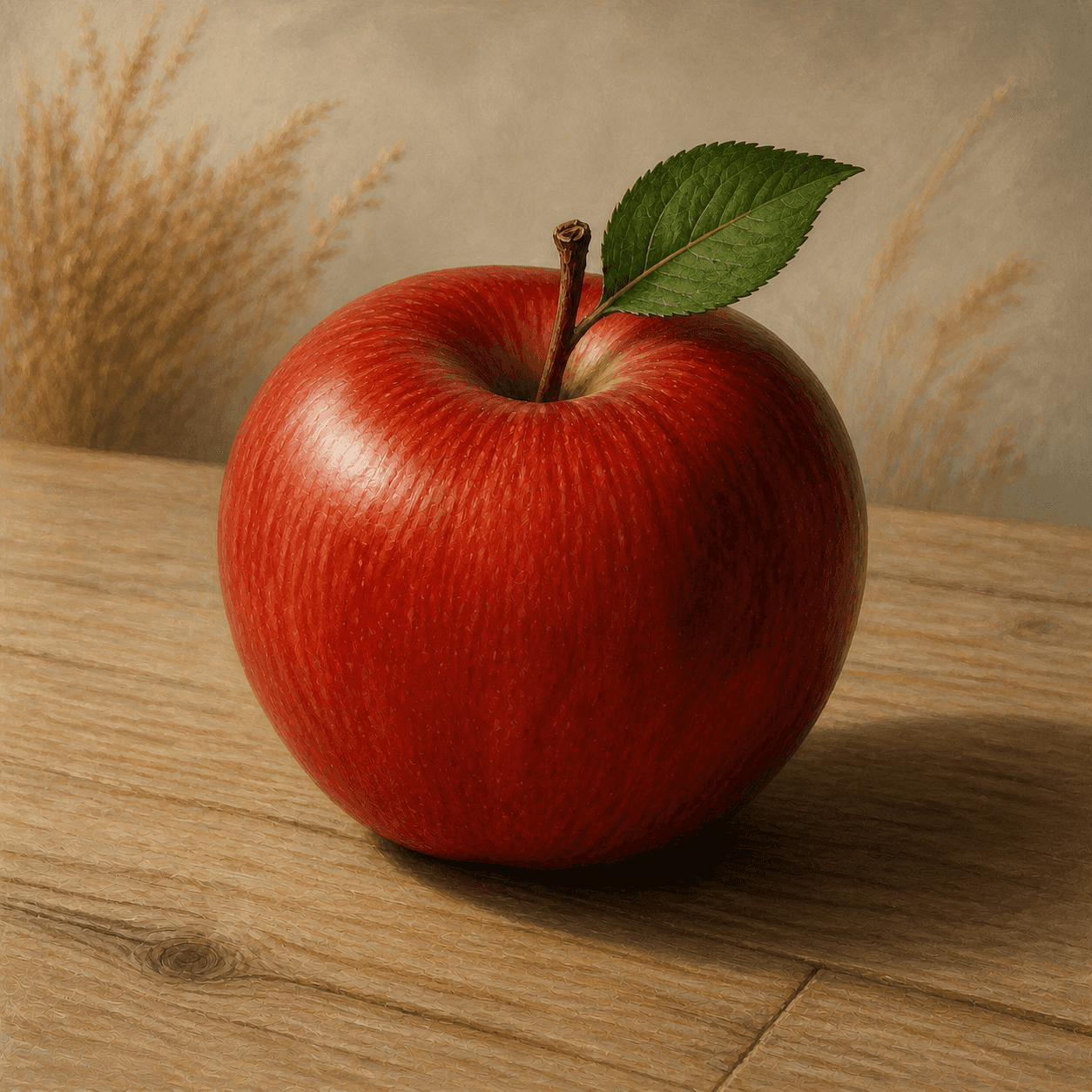
READ THE IMAGE
Skill is made almost invisible, and finish itself becomes authority
Ordered form, continuous modelling, and a corrected surface evoke academic training. This is a technical teaching image; the academic system was far more than one realistic appearance.
- 01
See drawing precede colour
Contour, hollow, and leaf veins follow stable construction, as though colour were laid over an already solved drawing.
- 02
See transitions disappear
Highlight moves into shadow without abrupt breaks; layered tone rounds volume while suppressing the hand.
- 03
See nature corrected
The fruit is full, leaf intact, and blemishes limited; observed fact is edited toward an exemplary form.
- 04
See finish assign value
Detail is densest on the subject while background and table recede, distributing labour by hierarchy.
In one sentence
Not one conservative style—
but an art world that institutionalised skill, subject, and career
European academies trained professional artists through copied prints, plaster casts, life models, anatomy, perspective, and history narrative. In nineteenth-century France, the École des Beaux-Arts, Prix de Rome, and official Salon formed the most influential model: history painting ranked above portrait, landscape, genre, and still life, while juries, medals, and placement affected commissions and sales. Academic art could absorb Neoclassicism, Romanticism, Realism, and photography, but generally valued legible story, ideal anatomy, and highly finished surface. The system also restricted women and other excluded groups from life study and official credentials.
VISUAL LANGUAGE
Visual DNA
Training
Drawing, anatomy, Classical model
Surface
Smooth, continuous, finished
Glaze and minute transition conceal brushwork to create seamless illusion.Narrative
Legible gesture, readable climax
Pose, expression, and prop transmit moral or dramatic meaning within history-painting codes.Hierarchy
History painting on top
Myth, religion, and national history ranked highest for combining multiple bodies, nudity, and ideas.Institution
Jury creates visibility
Academy, scholarship, wall position, criticism, and state purchase collectively manufacture prestige.Where it came from
‘Good art’ was written into lessons, competitions, and walls—and repeatedly contested
Academies raised artists' intellectual and social status through rigorous training and public standards, but also excluded bodies, subjects, and traditions from legitimacy. ‘Academic’ includes institutional innovation and a diverse Salon culture later avant-garde histories often flattened.
The French Royal Academy and Rome branch form
The state organises training, theory, hierarchy, and Classical study with history painting as the highest model.
Post-revolutionary institutions reorganise
The Institut, École des Beaux-Arts, and Prix de Rome preserve drawing, figure study, and old masters as a career path.
The Salon becomes a vast public arena
Works hang densely as acceptance, placement, medals, reviews, and state purchase determine international reputation.
Rejected and independent networks break the monopoly
The Salon des Refusés, artist-run shows, and new markets challenge official judgement; women enter the Paris École only in 1897.
ARTISTS & WORKS
Meet it through four works
Ingres, The Apotheosis of Homer
Ancient and modern luminaries gather symmetrically around crowned Homer, turning Classical tradition and academic lineage into a manifesto.Cabanel, The Birth of Venus
Pearl skin, wave-like pose, and myth make the nude both Classically legitimate and sensually fitted to Second Empire taste.Gérôme, Pollice Verso
Archaeological detail, precise bodies, and a theatrical instant make ancient spectacle credible while shaping later cinema's Rome.Bouguereau, The Birth of Venus
Multiple figures, smooth finish, and pyramidal order display difficult training while exposing the ideal female body made for Salon viewing.How to recognise it
Read the image—and the training and display system behind it
- ✓Do contour, anatomy, perspective, and modelling reveal extended drawing practice and correction?
- ✓Does continuous transition and ideal detail suppress brushwork into a high finish?
- ✓Do myth, religion, literature, or national history legitimate nudity and grand narrative?
- ✓Did academy, prize, official Salon, state purchase, or international exhibition produce the work's authority?
STYLE RELATIONS
Three competing authorities in the same century
Realism
Challenges academic hierarchy and ideal finish with ordinary contemporary subjects and visible matter.↗Academic Art
Builds professional and public authority through systematic training, grand narrative, and official display.CURRENTImpressionism
Uses independent exhibitions, momentary light, and open handling to bypass Salon finish.↗REFERENCES
Sources & image note
The apple interprets academic construction, tone, and finish, not the full variety of Salon art. Academic art requires works, curricula, juries, gender restrictions, and markets to be read together.