
Classical Art
Baroque
Baroque is not simply splendour: light, motion, material, and viewing position work together to turn the spectator into a participant.
READ THE IMAGE
A beam of light turns still life into an event
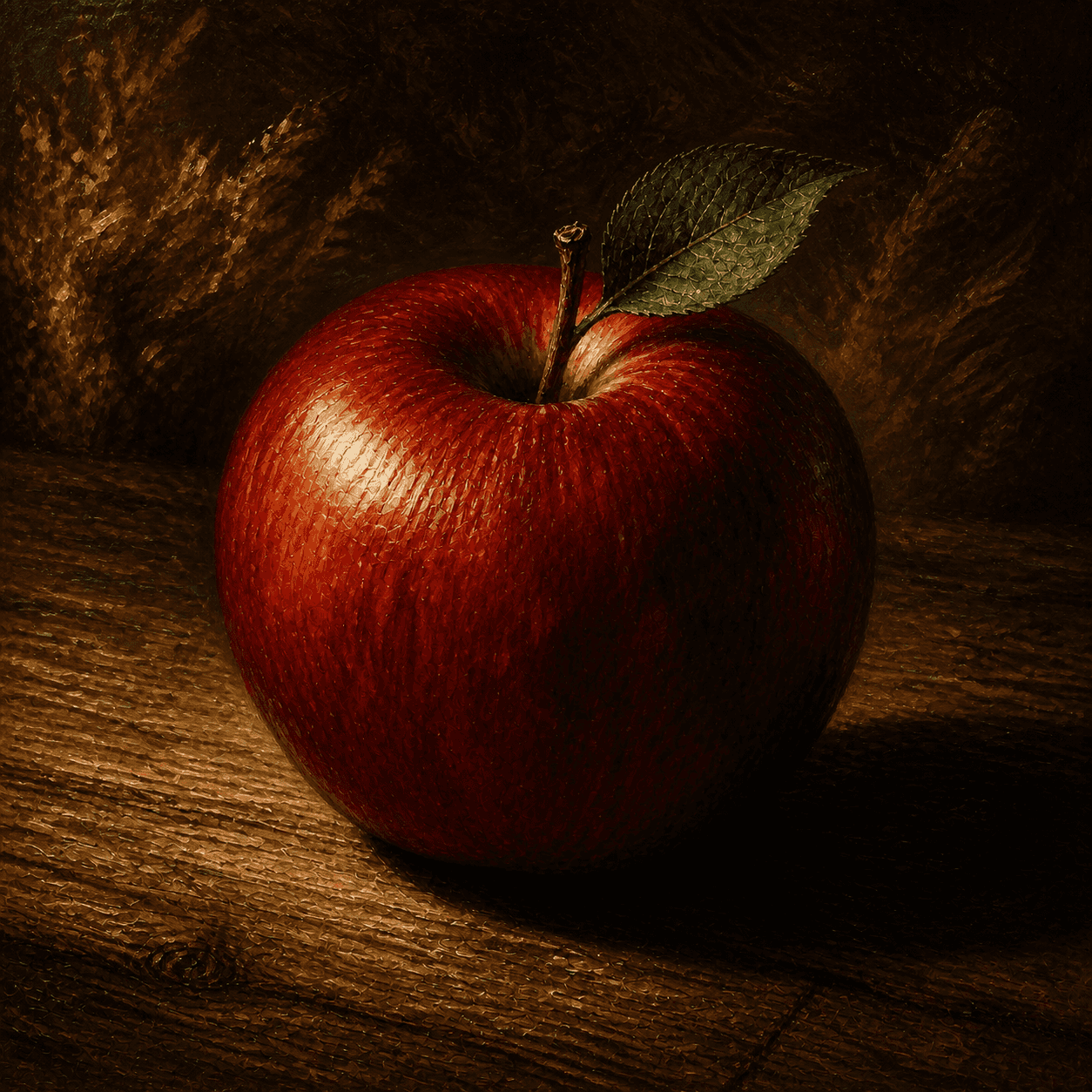
Dark ground, oblique spotlight, close subject, and dense surface suggest one dramatic strand of Baroque experience—not the whole period's shared appearance.
- 01
See light break in
Light cuts from the left across highlight and table before the right falls rapidly into darkness; illumination behaves like action.
- 02
Measure your distance
The apple presses toward the front edge, removing safe separation as Caravaggesque compositions push events into the viewer's space.
- 03
Find diagonals within stillness
Highlight, stem, leaf, and shadow establish directional flow and time inside a stationary subject.
- 04
Let material trigger touch
Dense strokes, veins, wood grain, and gloss translate sight into imagined smoothness, roughness, moisture, and weight.
In one sentence
Not one unified ‘ornate style’—
but many seventeenth-century methods of persuasion
Baroque names both a historical period from roughly the seventeenth to early eighteenth century and styles of movement, forceful light, open composition, and sensory abundance. Catholic Reformation art pursued clarity, feeling, and persuasion; monarchies used architecture and ritual to stage power; the Dutch Republic's citizen market supported portrait, landscape, still life, and quiet interiors. Caravaggio's dark realism, Bernini's total theatre, Rubens's motion, and Vermeer's restraint coexist in this varied world.
VISUAL LANGUAGE
Visual DNA
Light
Directed, dramatic, narrative
Motion
Diagonal, turning, unfinished
Bodies and drapery seem to cross frames at the most tense middle moment.Space
Entering the viewer's realm
Shallow depth, projecting limbs, and enveloping architecture destabilise real and represented space.Emotion
Legible, direct, embodied
Expression, pose, and texture make religion, power, or daily life felt before explained.Synthesis
Painting, sculpture, architecture, light
Altar, dome, square, and palace frequently become continuous theatre across media.Where it came from
Religious rivalry, absolutist courts, and new markets transformed viewing together
Baroque was never one route copied outward from Rome. Rome established influential naturalist and theatrical modes; Flanders, Spain, France, the Dutch Republic, the Americas, and Asia recombined them through religion, politics, trade, and local practice.
Carracci and Caravaggio reform painting
One joins observed nature to Classical order; the other shocks sacred narrative with street models, sharp light, and proximity.
Roman Baroque becomes total theatre
Bernini, Borromini, and others coordinate sculpture, building, city, and actual illumination as inhabitable events.
Regional Baroques diverge
Rubens serves court and church, Velázquez recasts royal vision, while Dutch markets sustain portrait, landscape, still life, and interior.
The mode enters global imperial networks
Versailles aligns ritual and axis with monarchy; Latin America, the Philippines, and beyond combine European forms with local craft under colonial power.
ARTISTS & WORKS
Meet it through four works
Caravaggio, Calling of Saint Matthew
Actual chapel light meets a painted diagonal beam, making divine calling present in a tavern-like room.Artemisia Gentileschi, Judith Slaying Holofernes
Crossed arms, blood, and bodies pressed forward make female action and violence physically weighty.Bernini, Ecstasy of Saint Teresa
Hidden window light, marble, gilt rays, and theatre boxes turn a chapel into precisely staged devotion.Vermeer, Woman Holding a Balance
Soft light, arrested gesture, and a Last Judgment image make daily weighing a restrained meditation on matter and eternity.How to recognise it
Ask how the work directs your body and attention
- ✓Does light select information, mood, and dramatic instant like a stage director?
- ✓Do diagonals, twisting bodies, or open composition continue beyond the frame?
- ✓Does proximity, enclosure, or actual illumination include the viewer in its space?
- ✓Does it answer Catholic persuasion, court power, Dutch market, or another regional and colonial context?
STYLE RELATIONS
From artificial elegance to sensory participation
Mannerism
Displays artifice through elongated proportion, learned quotation, and ambiguous space.↗Baroque
Activates viewers directly through light, motion, material, and real space.CURRENTRococo
Shifts courtly scale toward intimate salons, replacing monumental drama with light curves, pastels, and playful intimacy.↗REFERENCES
Sources & image note
The apple concentrates tenebrism and close-range drama as one Baroque strategy. Historical Baroque spans religion, court, citizen markets, and global colonial networks.