
Classical Art
Rococo
Rococo draws Baroque theatre into salons and private rooms: curve, pastel, mirror, and intricate craft make space intimate, fluid, and playful.
READ THE IMAGE
Once weight is softened, the surface begins to move like music
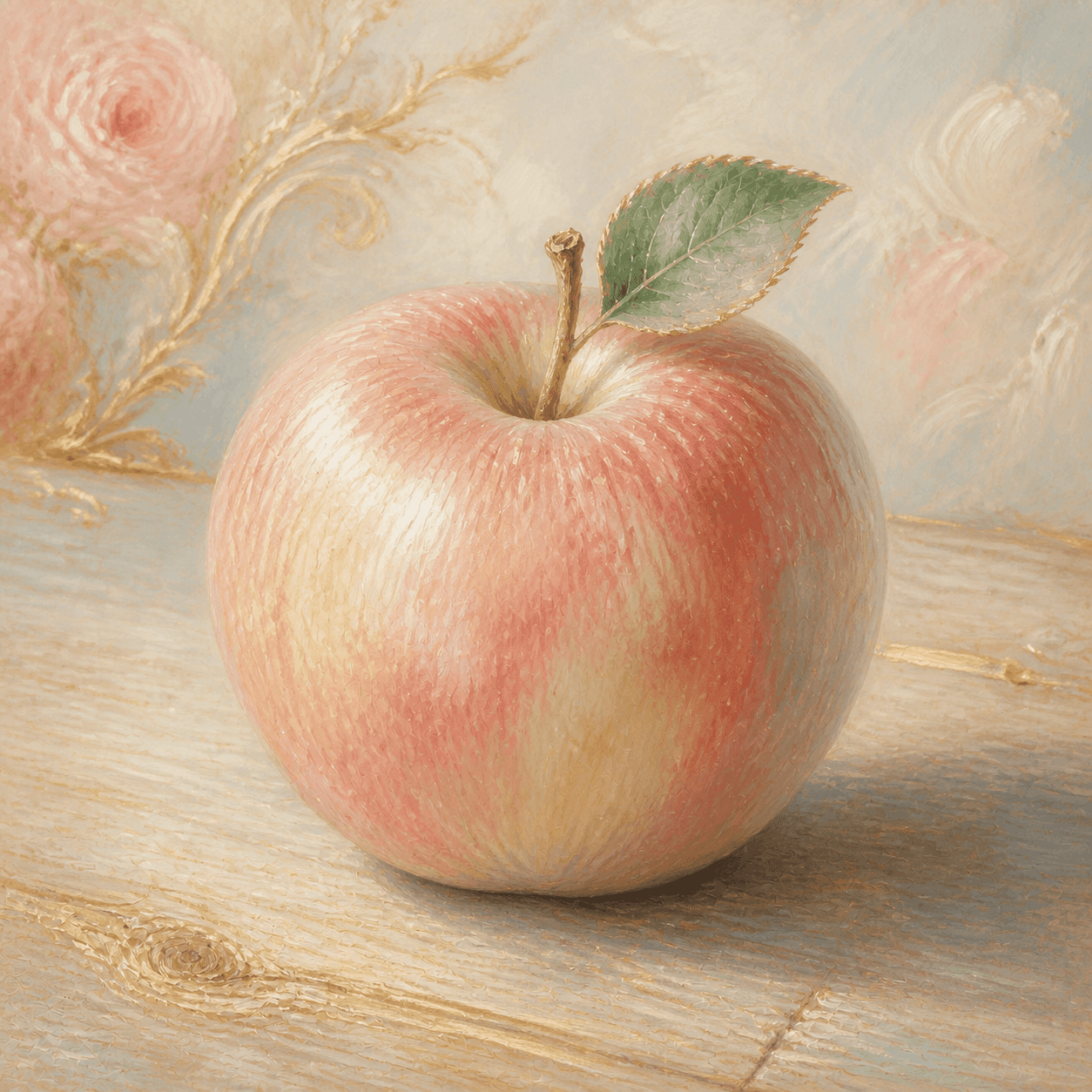
Pink, cream, pale blue, gilt edging, and vegetal curl suggest Rococo decoration. This teaching image focuses on French interiors, not all eighteenth-century art.
- 01
See colour lighten weight
Deep red becomes pink, apricot, and cream; soft modelling wraps matter in air and sheen.
- 02
Follow asymmetrical curves
Flowers, stems, and leaf travel in S-curves without mirror symmetry, yet retain buoyant balance.
- 03
See boundaries dissolve
Subject, background, and table share pale colour and soft marks, becoming a continuous decorative field rather than Baroque depth.
- 04
See gold flicker
Small gilt touches on leaf, branch, and table jump as the eye moves, recalling carved wood, gilding, mirrors, and porcelain in a salon.
In one sentence
Not merely a ‘pretty feminine style’—
but decoration that rewrote scale and sociability for intimate rooms
Rococo relates to rocaille—shell and rock ornament—and was often pejorative at first. After 1715, French elites shifted from Versailles ceremony toward smaller Parisian salons, where woodwork, mirror, furniture, silver, and painting formed continuous ensembles. C- and S-curves, asymmetrical shells, flowers, pastels, and light subjects travelled through prints, goods, and migrant craftspeople across Europe and the Americas. Painted fêtes, love, and play could also carry transience, desire, and melancholy.
VISUAL LANGUAGE
Visual DNA
Line
C-curve, S-curve, asymmetry
Colour
Pastel, cream, gilt
Low contrast and reflective material lighten mass into soft, expensive brightness.Space
Intimate, enveloping, edgeless
Mirror, panelling, and curved furniture join small rooms for conversation, viewing, and performance.Subject
Fête, love, play
Myth and pastoral become light metaphors for elite sociability, often shadowed by transience.Craft
Collaboration across media
Designers, carvers, gilders, weavers, and porcelain workshops build the apparent effortlessness together.Where it came from
From palace axis to salon curve: power remained but changed tone
After Louis XIV, French elites spent more time in Parisian private houses, whose social spaces encouraged informality and intimacy. Rococo still depended on aristocratic wealth, global commodities, and specialised labour; in German-speaking lands it also shaped luminous Catholic churches.
The Regency changes the scale of French life
With court focus briefly away from Versailles, Paris houses and salons foster lighter interiors and fête galante painting.
Mature rocaille unifies room and object
Asymmetrical panelling, mirror, furniture, tapestry, silver, and porcelain form ensembles while prints spread design.
Rococo becomes international
South German and Austrian churches, Meissen porcelain, British and American furniture reinterpret curve and foliage locally.
Moral criticism and Neoclassicism rise
Enlightenment critics link Rococo to luxury and frivolity as archaeology and public virtue favour stricter Classicism.
ARTISTS & WORKS
Meet it through four works
Watteau, Pilgrimage to Cythera
Elegant figures seem to arrive at or leave Love's island; luminous gesture and uncertain departure shade pleasure with melancholy.Salon de la Princesse, Hôtel de Soubise
White panelling, gilt scrolls, mirrors, and curved walls dissolve the room's boundary as a total interior.Boucher, Madame de Pompadour
Books, prints, silk, and furniture stage the royal mistress as an agent of taste, learning, and patronage.Fragonard, The Swing
Pink skirt, flying shoe, hidden lover, and garden turn along curves, packaging voyeurism, speed, and desire as play.How to recognise it
Do not just find pink—see space become intimate and continuous
- ✓Do C- and S-curves, shell, and foliage create controlled asymmetry?
- ✓Do pastel, cream, mirror, and gilt reduce the apparent weight of wall and object?
- ✓Do fête, love, play, or pastoral subjects retain ambiguity and transience?
- ✓Does the work belong to an interior, furniture, porcelain, or wider craft ensemble rather than an isolated canvas?
STYLE RELATIONS
From monumental theatre to intimate play, then public virtue
REFERENCES
Sources & image note
The apple concentrates French pastel and scroll decoration as a contemporary teaching image. Rococo also requires attention to room scale, craft collaboration, patronage, and international circulation.