
Illustration
Children’s Picture Book
A picture book is not text decorated with cute images. Picture, language, design, and page turn tell together; the child reads a book unfolding through time.
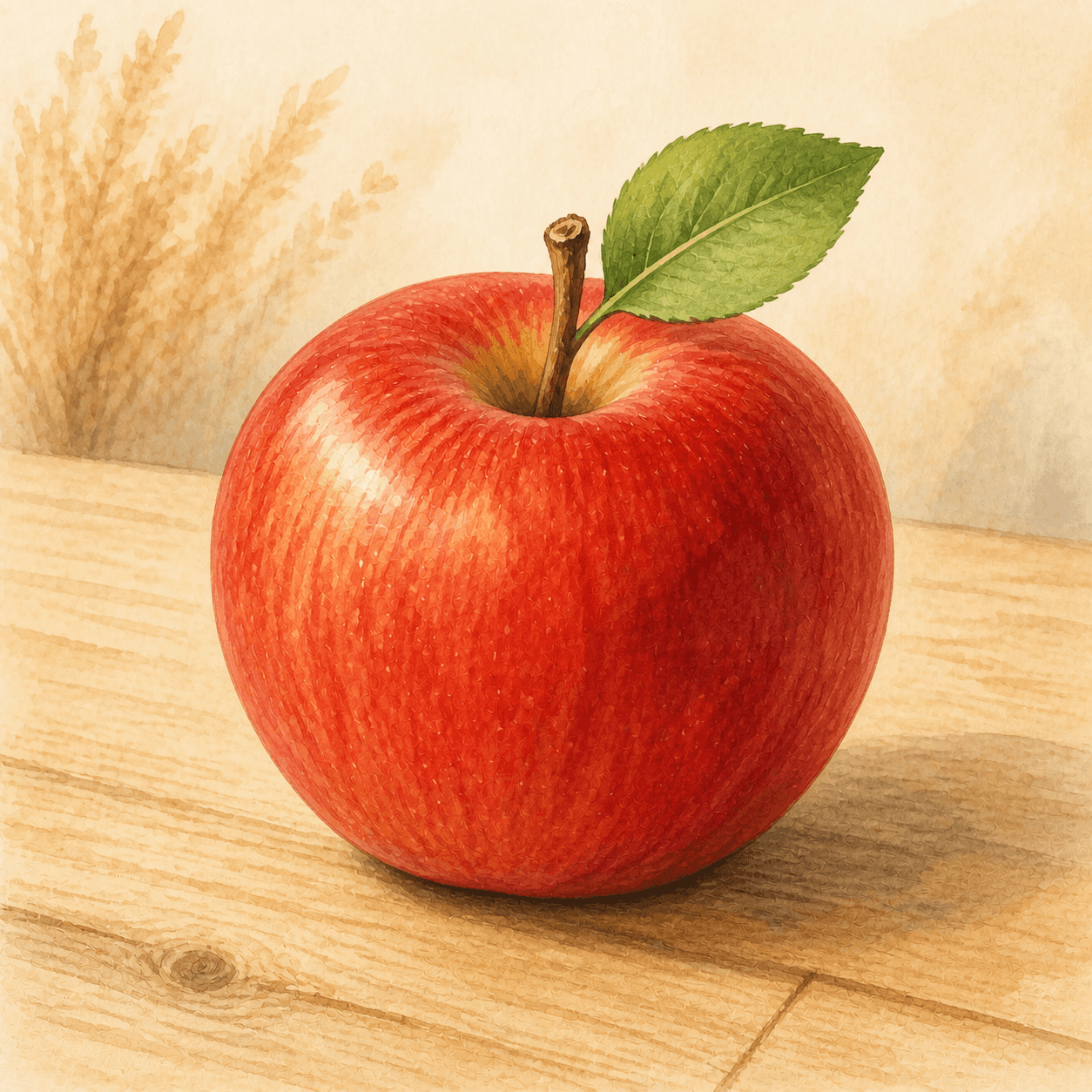
READ THE IMAGE
Nothing moves, yet the apple feels like the pause before a story
Warm white space, soft edges, and tactile paper reduce visual pressure. The apple meets a child's eye level, while the open upper field seems ready for words or an event on the next page.
- 01
Meet the subject at eye level
The apple is seen straight on rather than from above, close enough to touch and carry into a story.
- 02
Invite looking through material
Watercolour bloom and small marks preserve handwork, rewarding repeated inspection.
- 03
Tune emotion with colour
Cream paper surrounds saturated red: vivid without glare, creating a warm, secure atmosphere.
- 04
Imagine what the turn changes
The apple sits stably at centre; in a book its position, scale, or disappearance could become the next event.
In one sentence
The basic unit is not one illustration—
it is the spread and the turn
A children's picture book makes a sequence of images the primary reading experience; words may supplement, contradict, or fall silent. Cover, title page, endpapers, every spread, and each turn participate. Strong books organise information for children's understanding without assuming children can accept only simple, sweet, or didactic material.
VISUAL LANGUAGE
Book DNA
Word–image relation
Complementary, open
Spread
One stage
Facing pages, gutter, and edges jointly govern composition and direction.Page turn
Edit and suspense
The reader physically triggers a jump, reveal, reversal, or repetition.Rhythm
Repetition with change
Returning phrases, forms, and layouts build expectation; difference advances story.Child viewpoint
Respectful, enterable
Scale, detail, and emotional cues aid understanding without cancelling complexity.Where it came from
Print put images in children's hands; modern picture books made the whole book narrate
Primers, nursery collections, and cheap print formed a broad base. Nineteenth-century colour printing and artists such as Randolph Caldecott strengthened sequential action. Design, photography, collage, and wider childhood experiences expanded the form in the twentieth century and beyond.
Children's publishing emerges
Primers, fables, and illustrated knowledge mix instruction and pleasure, often led by adult moralising.
Pictures begin to narrate
Colour printing advances; Caldecott's continuous action and word-image alternation shape modern grammar.
A small format meets a child's scale
Beatrix Potter insists Peter Rabbit fit small hands and carefully controls image, wording, and production.
Media and voices widen
Sendak, Carle, and others expand psychological space, collage, and whole-book rhythm as more lives enter the form.
ARTISTS & WORKS
Meet it through four makers
Randolph Caldecott
Lets pictures continue action when words pause, establishing a modern relay between the two.Beatrix Potter
Integrates natural observation, concise prose, and a small format suited to children's hands.Maurice Sendak
Acknowledges children's anger, fear, and desire, using spread scale for a psychological journey.Eric Carle
Connects colour, touch, and growth through painted-tissue collage, repetition, and page devices.How to recognise it
Do not inspect style alone—turn the book
- ✓Do pictures provide action, clues, or emotion absent from the words?
- ✓Does spread composition account for gutter, edge, and reading direction?
- ✓Does the page turn alter time, scale, information, or expectation?
- ✓Do language and image respect the intended age while rewarding rereading?
STYLE RELATIONS
Three neighbouring image tasks
REFERENCES
Sources & image note
The apple is a contemporary teaching interpretation of watercolour picture-book atmosphere: intimate scale, warm colour, and handmade texture. A single image cannot show the form's essential page-turn rhythm, so the observation also asks what a following spread might change.