
Chinese Art
Gongbi
The craft in gongbi is not mechanical detail: controlled line, accumulated colour, and sustained observation organise form, texture, and living spirit.
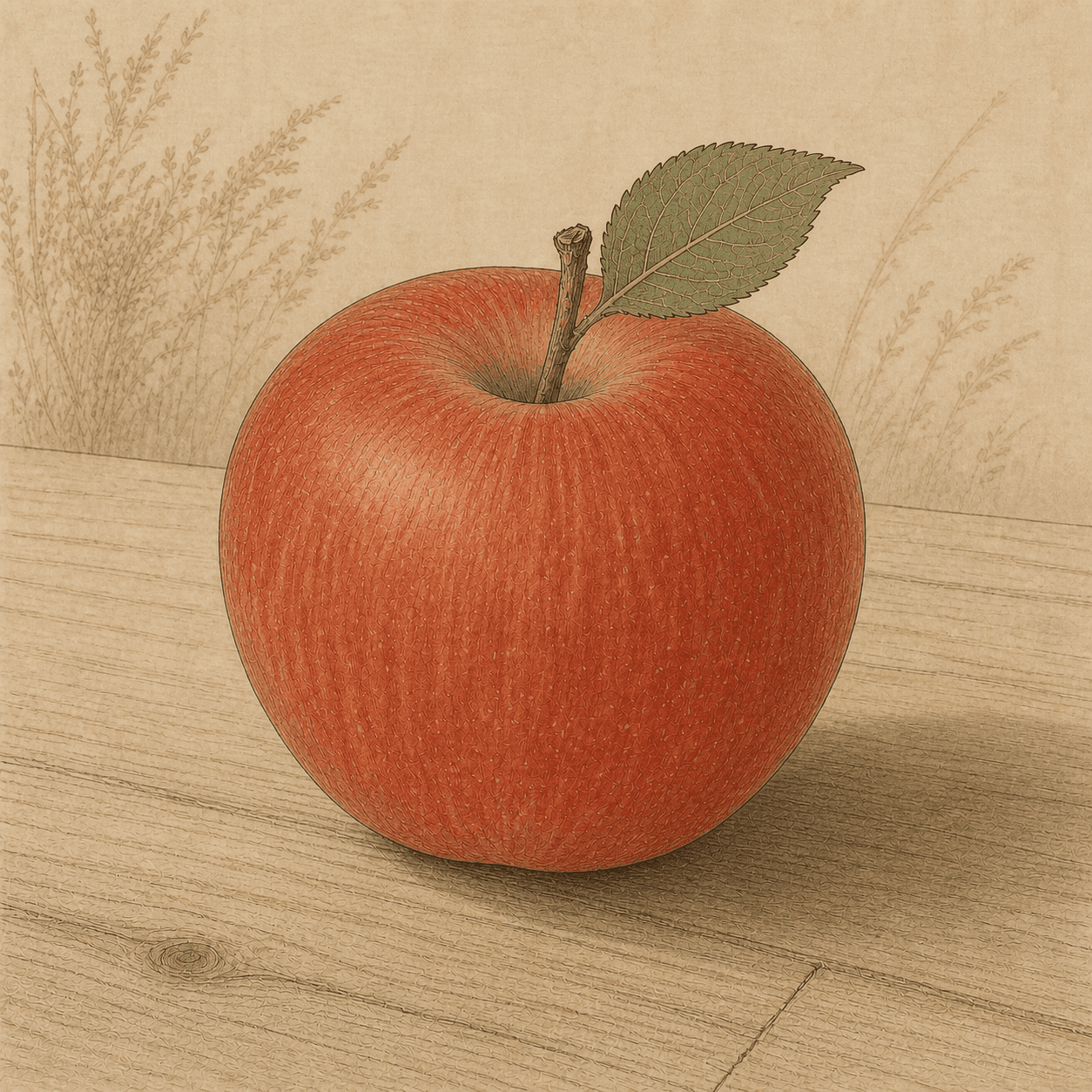
READ THE IMAGE
Read line before colour: form is constructed layer by layer
Fine contour, steady colour, and a paper-silk ground suggest gongbi process. This teaching image copies no historical work.
- 01
See contour turn and vary
The apple edge is not a digital stroke; pressure and turning distinguish round body, hollow, and serrated leaf.
- 02
See colour accumulate
Red develops through thin layers, preserving ground in light and deepening shadow through repetition rather than one opaque pass.
- 03
See detail serve the whole
Fruit dots, veins, and stem marks follow volume; meticulous work is not information spread evenly.
- 04
See blank space shaped
Pale ground and sparse plants let the subject breathe, concentrating precision instead of filling every area.
In one sentence
Not simply finer and more lifelike—
but ordered brush and colour achieving form with spirit
Gongbi names meticulous methods within Chinese painting. Artists often establish structure in line, then build ink and colour through graded washes, overlays, and selective accents; on silk or sized paper, layers may remain translucent or use dense mineral pigment. Gongbi is closely tied to court art but is not identical with it: professional, literati, and modern artists have all used it. Nor is it the absolute opposite of xieyi; a single image may render a bird minutely against freely brushed rock.
VISUAL LANGUAGE
Visual DNA
Line
Exact yet calligraphic contour
Colour
Layered, rich without clogging
Transparent wash and mineral coverage combine by subject and period, often allowing the ground to glow.Form
Minute observation, form joined to spirit
Structural accuracy supports posture, breath, and the living state of a subject.Space
Focused fragment and cultivated blank
Album leaf, cut branch, and corner composition turn close observation into a complete world.Process
Slow making and material control
Outlining, sizing, washing, drying, and re-outlining demand waiting and repeated judgement.Where it came from
From figure line to bird-and-flower observation, meticulous traditions kept changing
Gongbi is a later umbrella term; early works did not call themselves by this label. Court academies fostered standards and patronage, while workshops, religious painting, professionals, and modern schools also sustained and transformed the methods.
Figure painting builds narrative through line and colour
Fine linear types organise dress, identity, and story across murals and scrolls.
Bird-and-flower joins close observation to court institutions
The Huang Quan lineage and academies value rare species, accurate structure, and sumptuous colour—the ‘Huang family's wealth and honour.’
Court, professional, and regional tastes diverge
Southern Song academies refine poetic brevity; Qiu Ying joins precise figures, architecture, and blue-green colour to literati collecting.
Gongbi enters schools, exhibitions, and new materials
Chen Zhifo, Yu Fei'an, and others combine sketching, design, and heavy colour as contemporary artists expand support, pigment, and subject.
ARTISTS & WORKS
Meet it through four works
Attributed to Gu Kaizhi, Admonitions Scroll
Fine continuous line orders pose and drapery, with restrained colour and narrative unfolding through the handscroll.Huang Quan, Sketches of Rare Birds
Insects, turtle, and birds are studied separately with exact structure and texture, revealing the knowledge base of court bird-and-flower painting.Emperor Huizong, Auspicious Cranes
Cranes wheel above palace roofs; precise feathers, blue-green architecture, and ceremonial design turn nature into dynastic omen.Qiu Ying, Spring Morning in the Han Palace
Figures, objects, buildings, and gardens connect in meticulous handscroll rhythm to stage an ideal courtly day.How to recognise it
Do not count detail alone; see line, colour, and vitality cooperate
- ✓Does brush contour explain structure through pressure and turning rather than uniform hard edge?
- ✓Does colour build through graded and overlay washes with the ground participating?
- ✓Does detail serve posture, volume, and spirit rather than decorate evenly?
- ✓Could meticulous and freehand methods coexist, so a loose background does not disqualify gongbi?
STYLE RELATIONS
Different speeds within one brush-and-ink world
Gongbi
Builds form and spirit through controlled contour, layered colour, and minute observation.CURRENTXieyi
Uses selection, abbreviation, and brush rhythm to seize expressive intent rather than exhaustive description.↗Literati painting
Builds cultural identity through poetry, calligraphy, brush cultivation, and self-expression—not one technique.↗REFERENCES
Sources & image note
The apple is a contemporary teaching interpretation of contour, thin colour layers, and silk-paper atmosphere. Gongbi is a transhistorical set of methods, not a dynasty, court identity, or high-detail filter.