
Chinese Art
Xieyi
Xieyi is not merely using fewer strokes; it knows what must remain and what can disappear, allowing brush and ink to reveal speed, breath, and judgement as they depict.
READ THE IMAGE
Paper white is not unpainted, and a broken stroke is not unfinished
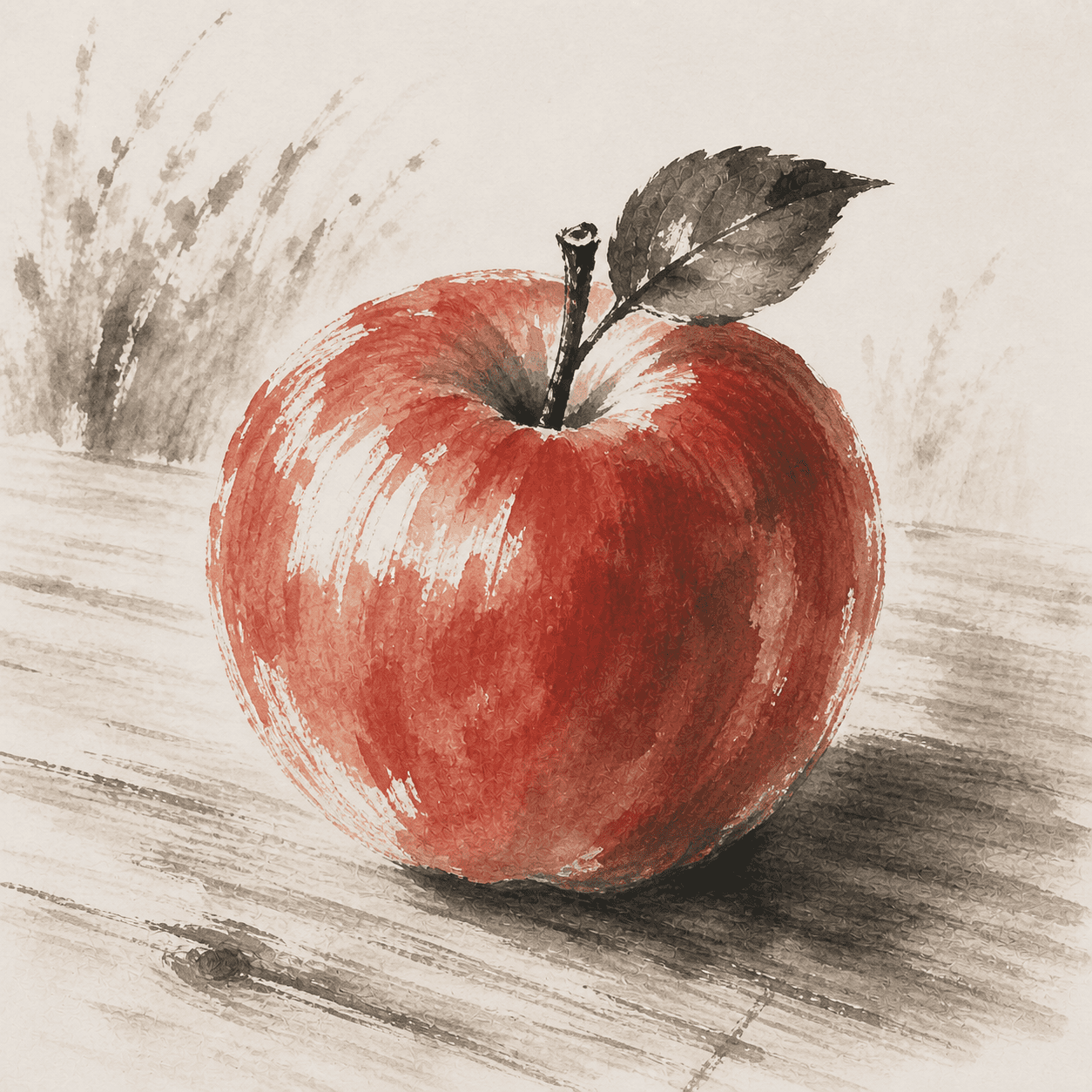
Flying white, splash-like marks, ink gradation, and abbreviation suggest xieyi. This teaching image imitates no historical master.
- 01
See paper become highlight
The left side is not filled with white pigment; absorbent ground participates directly in light, forming volume between presence and absence.
- 02
See one stroke do many jobs
Red marks carry edge, roundness, skin direction, and speed at once, compressing information into handling.
- 03
Read wet, dry, dark, pale
Wet red, dense black, pale grey, and dry drag create space, texture, and emotion through material contrast.
- 04
See omission preserve spirit
Plants and wood grain retain direction without every leaf or line; reduction concentrates overall vitality.
In one sentence
Not casual shorthand—
but highly compressed brushwork writing the subject's intent
Xieyi refuses bondage to surface likeness, using selection, exaggeration, and calligraphic action to capture a subject's living impulse and the artist's cultivated intent. It rests on copying, observation, calligraphy, and material experience; apparently rapid execution depends on internalised structure. Xieyi ranges from restrained ‘small’ to bold ‘great’ freehand and is not limited to ink bird-and-flower painting. Nor is it the absolute opposite of gongbi: mixed meticulous and free methods are common.
VISUAL LANGUAGE
Visual DNA
Brush
Momentum, many meanings per stroke
Ink
Dark, pale, wet, dry in relation
Ink is not one black but time and water from scorched density to near-clear wash.Form
Between likeness and unlikeness
Subjects may distort or reduce, yet key structure and attitude remain perceptible.Emptiness
Blank paper composes
Open ground carries breath, distance, and the unsaid rather than awaiting completion.Writing
Painting, calligraphy, poetry interact
Brush method, inscription, and seal form rhythm and cultural context on one plane.Where it came from
From transmitting spirit to expressing through brush and ink, likeness kept being renegotiated
No single inventor created xieyi. Early form-and-spirit theory, Chan abbreviation, literati calligraphic painting, and Ming–Qing ink experiment together shaped it. Later histories often overstate a binary between gongbi and xieyi.
Spirit and abbreviated brush provide foundations
‘Writing spirit through form’ joins likeness to inward life; Liang Kai and others make a few marks carry a figure's character.
Literati practice strengthens writing and selfhood
Su Shi questions likeness as the sole criterion; Yuan painters combine calligraphic brush, inscription, and transformed antiquity.
Great freehand bird-and-flower matures
Chen Chun and Xu Wei use cursive momentum and saturated ink for flowers and fruit, bringing biography and emotion forward.
Lineages of individuality expand
Bada Shanren, Yangzhou painters, Wu Changshuo, and Qi Baishi remake xieyi through distortion, epigraphic brush, and daily subjects.
ARTISTS & WORKS
Meet it through four works
Liang Kai, Immortal in Splashed Ink
Dense and pale masses form face and robe at speed; exaggerated body and few lines capture intoxication and transcendence.Xu Wei, Grapes
Saturated vine, bead-like fruit, and cursive poem run as one breath, joining object, biography, and ink event.Bada Shanren, Lotus, Rock, and Waterbird
White-eyed bird, precarious rock, and broad lotus shapes create tense emptiness whose political meaning remains powerful but indirect.Qi Baishi, Shrimp
Pale bodies become transparent while dark eyes, feelers, and joints fix spirit in a few marks and preserve motion through water.How to recognise it
Test whether selection is exact, then whether brush and ink live on their own
- ✓Do few strokes carry structure, texture, direction, and emotion together?
- ✓Do ink gradation, wetness, dryness, bleeding, and paper white actively form the image?
- ✓Do distortion and omission retain spirit rather than merely produce a sloppy look?
- ✓Do inscription, calligraphy, seal, and painting organise meaning and rhythm together?
STYLE RELATIONS
Meticulous and abbreviated are not a hierarchy
REFERENCES
Sources & image note
The apple interprets xieyi through paper white, splashed handling, and wet-dry ink contrast. It represents no single painter and cannot reduce xieyi to an ink filter or fast effect.