
Japanese Art
Yamato-e
Yamato-e is not a blanket term for ‘classical Japanese style.’ It first distinguished Japanese tales, seasons, and places from Tang painting, then made court privacy, sacred legend, and historical conflict readable in the slow time of an unfolding scroll.
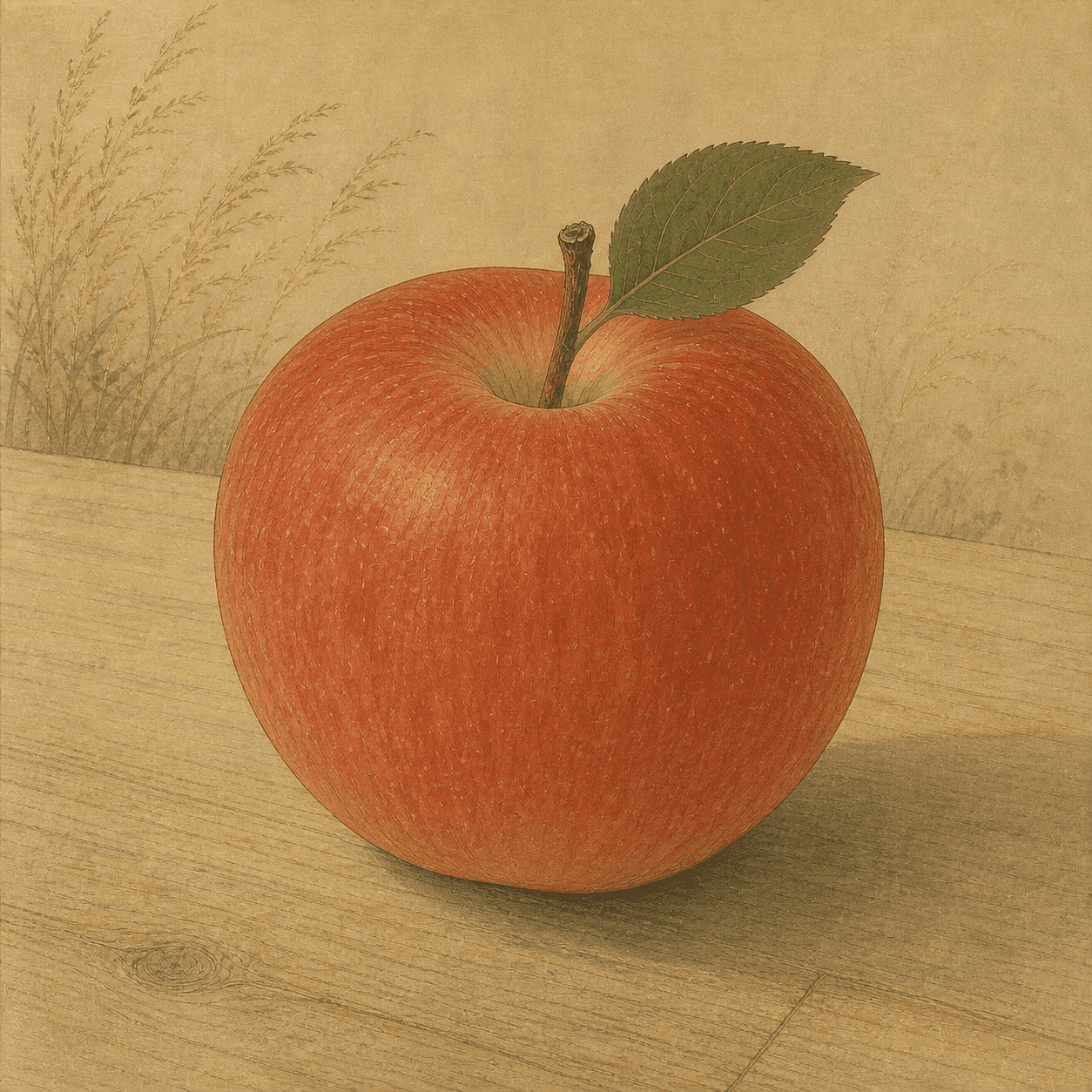
READ THE IMAGE
This is not one realistic still; paper tone, layered colour, and seasonal grass make a remembered scene
Warm ochre-gold ground, layered vermilion, fine contour, and autumn grasses suggest classical yamato-e atmosphere without copying a scroll episode.
- 01
See colour build in layers
The fruit accumulates soft opaque vermilion while contour remains clear, closer to tsukuri-e layering than one transparent wash.
- 02
See paper and golden haze merge
Warm gold does not describe a literal sky. It resembles decorated ground and cloud bands that turn location into poetic memory.
- 03
See plants mark season
Slender autumn grasses quietly determine time and mood. Yamato-e often links flower, weather, and month to the feeling of waka.
- 04
See the diagonal imply continuous space
The table edge carries the eye out of frame. In a handscroll, such direction could lead one episode toward the next.
In one sentence
Not one fixed manner—
but a tradition repeatedly remaking Japanese subject, narrative format, and court memory
In Heian usage, yamato-e distinguished paintings of Japanese land, stories, and seasons from kara-e on Chinese themes. Later it also named formal conventions tied to those subjects: bright layered colour, fine line, cloud bands that hide and divide, elevated viewpoints, and fukinuki yatai or ‘blown-off roof’ interiors. Not every work uses every feature. A handscroll reveals only a small section at a time as text and image alternate, making pauses, anticipation, and return part of seeing. Yamato-e is therefore imagery and a duration of reading.
VISUAL LANGUAGE
Visual DNA
Subject
Japanese tales, seasons, and famous places
Tsukuri-e
Ink plan and dense colour alternate
A composition begins in ink, receives opaque layers, then regains contour and facial detail.Cloud
Concealment becomes editing
Gold, silver, or coloured bands hide intervals, divide events, and connect different places and times.Viewpoint
Blown-off roofs open private rooms
Removing the roof from a high oblique view exposes interior relations beyond architectural walls.Scroll
Unrolling controls narrative
Left hand opens, right hand closes, roughly two feet at once; repeated figures and settings move time across paper.Where it came from
Beginning with court distinctions between ‘Japan’ and ‘Tang,’ yamato-e kept absorbing foreign form while rewriting local history
Yamato-e was never isolated from China. Scroll, pigment, and composition all have continental histories; ‘Japaneseness’ was built through selecting subject, poetry, and modes of viewing.
The name yamato-e appears in court culture
After official missions to Tang China ended, waka and Japanese seasons and places gained emphasis on screens and architectural painting.
Tale handscrolls mature as narrative art
The Tale of Genji uses tsukuri-e, blown-off roof, and stylised faces for court psychology; Ban Dainagon deploys continuous action.
Religion, warfare, and portrait widen the field
Shrine-temple origins, monk biographies, war tales, and nise-e likenesses bring physical action and individual faces forward.
Tosa lineage maintains and spreads the classics
Court painters systematise convention while merchants and town artists consume Genji and famous places; Rinpa and ukiyo-e selectively transform the heritage.
ARTISTS & WORKS
Meet it through four scroll traditions
Tale of Genji Scroll, Azumaya
A blown-off roof gives access to women's quarters; dense tsukuri-e, stylised faces, and text compress psychological tension into stillness.Ban Dainagon Scrolls
Fire, running crowds, and political accusation unfold through repeated figures and continuous streets; only unrolling gradually reveals the case.Illustrated Legends of the Kitano Tenjin Shrine
Sugawara Michizane's injustice, transformation into a thunder deity, and appeasement through shrine building join court history, disaster, and worship.Tosa Mitsuyoshi, Genji Album
Fifty-four chapters become jewel-like leaves where gold cloud, elevated architecture, and classical figures carry Heian memory into Momoyama–Edo collecting.How to recognise it
Judge subject, format, and viewing action—not merely gold clouds and ancient dress
- ✓Does the subject come from Japanese tale, waka, season, famous place, shrine-temple origin, or local history?
- ✓Do cloud bands, blown-off roof, elevated view, and repeated figures organise space and time?
- ✓For a handscroll, how do text, image, opening direction, and visible segment control information?
- ✓Can Heian original, Kamakura expansion, Tosa revival, and later Genji image be kept historically distinct?
STYLE RELATIONS
Classical narrative, urban present, and decorative nature use different systems
Yamato-e
Builds court and historical memory through Japanese tales, seasons, famous places, and scroll time.CURRENTUkiyo-e
Uses publisher-led colour woodblock to track Edo actors, fashion, sights, and market.↗Rinpa
Distils classical poetry into decorative nature across gold-silver painting, craft, and design.↗REFERENCES
Sources & image note
The apple suggests yamato-e through layered colour, golden paper, fine line, and autumn grass. With no text, figures, or real unfolding mechanism, it remains a visual entry point.